Thursday, December 31, 2020

A Good Walk Perfected


Sometimes I wonder whether what I’ve written is relevant.  Perhaps at a point in time a piece was newsworthy or interesting.  However, time and current events often catch up and leave your piece as something to be filed under “P” for passed its best before date.

However, this story, basically a report on a presentation on birds and birding, seems more relevant today that when I put fingers to keyboard back in May of 2014. 

----

It has been said that golf is a good walk spoiled.

But birding is “a good walk perfected.”  That was the message Jeff Gordon brought recently  to a large group of outdoor enthusiasts at Bird Studies Canada’s (BSC) National Office in Port Rowan just about 400 metres from my residence.

Yes, we have a National Office in Port Rowan. And Gordon, a celebrity in the birding world was a most able and appropriate speaker as spring migration is ramping up here on Ontario’s South Coast.

Gordon heads up the American Birding Association (ABA), a non-profit organization that provides leadership to North America birders and also contributes to bird and bird habitat conservation through its programs.

He was in town to participate as the Celebrity Birder in the annual Baillie Birdathon as well as to speak at this special event billed as a Celebration of Birding.

Gordon is passionate about birding and birds.  He worries, though, that birders need to open up to others who may be interested in nature and the outdoors but are intimidated by the vast knowledge many experienced birders present.  Rather birders need to be “evangelists” about their hobby and help “break down barriers” for newcomers.

Gordon’s presentation included plenty of action shots of birders from around North America including Alvaro Jaramillo. (Jaramillo coined the “good walk perfected” line.)  The ABA head takes these types of pictures because birders are good at taking photos of warblers and eagles and the like but not so good at taking pictures of people enjoying birds.  More images that capture the “grandeur of birding” are needed.

Earlier in the day, local ornithologist Tim Lucas found a rare Kirtland’s Warbler near the entrance to the new Long Point Provincial Park.  This is considered North America’s rarest warbler and is normally found only in a small area in the north central part of Michigan’s Lower Peninsula during breeding season.

Gordon and a dozen or so others were there.  He captured the excitement on his smart phone and shared the footage in the evening presentation thereby reinforcing his key message.

I think Gordon made his point well that night.  The next day another relatively rare bird was located in the area.  Check out this picture from Jody Allair's twitter account and you should be able to share in the enthusiasm with those seeing a Bell’s Vireo for the first time.


-----

This story was originally published by Forever Young, a Metroland paper.


Update:

**In 2020 Bird Studies Canada changed in name to Birds Canada.  That change is recognition that their work extends beyond the study of birds and encompasses “public engagement, habitat stewardship, education and training, involvement in guiding conservation decisions, and more.”

**If you’re not doing anything on New Year’s Eve, join the American Bird Association (ABA) as they announce the new Bird of the Year at midnight St Pierre et Miquelon time (10 pm EST)


Monday, December 28, 2020

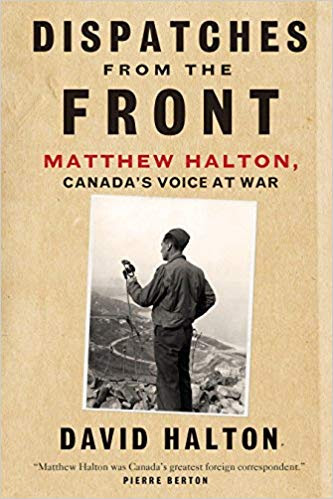
Dispatches from the Front*


“Call them out ... Dunkirk, Tobruk, Alamein, the delaying action in Burma, the last stand at Sollum… Call them out, and then add Moro River …

The attacking Canadians beat two of the finest German divisions that ever marched.” 

Matthew Halton reporting from the ruined town of Ortona, where 2,400 Canadians were killed or wounded. December 28, 1943

------

David Halton begins his book Dispatches from the Front with a story from 1987. The author recalls a journalism student heading into the CBC Archives to research an individual she and most of her classmates had never heard of. That would be Halton’s father, Matthew. Matthew Halton is considered to be one of the best war correspondents of World War II.


In his preface, David Halton describes his father as “a more or less forgotten name for all but survivors of the war-time generation.”

I’ll admit to knowing very little of the Toronto Star/CBC journalist. Several years ago I heard a tape of some his dispatches. The reports were riveting and the reason I put Dispatches on my must read list.  I re-read it earlier this month.

Halton, the son, has written an extremely well researched, objective memoir 

of his famous father. It helped fill in some holes in this baby boomer’s understanding of the Depression and Second War history. 

Here are a few facts I gleaned from the book.

1. In a two-month period in the fall of 1933 Halton wrote 30 reports from Germany. Now known as the German Reports, they “chronicled almost every defining aspect of Nazi Germany.” They told truths that most other media were ignoring. Halton held back most of these reports until he was out of the country in order to avoid the harassment from authorities that other journalists were experiencing.  For example, on Oct. 16 he wrote: “Germany is literally becoming a laboratory and breeding ground for war, unless I am deaf, dumb and blind.”

2. Later that October, Halton observed: “The terror goes on unremittingly in the form of a deliberate and implacable intention to wipe the Jews out of the economic and social life of Germany.” 

3. Beginning in 1936, Matthew Halton was critical of then Chancellor of the Exchequer (Finance Minister) Neville Chamberlain who was later to be Prime Minister. By December of 1939, Halton called for new leadership “who has not only cool determination but also some high strategic vision.” In his view, that new visionary leader was Winston Churchill. Halton’s viewpoint was a controversial one. Churchill had many critics including Mackenzie King. In a diary entry, our Prime Minister described Churchill as “one of the most dangerous men I have ever known.”  King who had an extended 75 minute meeting with Hitler in 1937 described the German dictator as having a very nice sweet (smile) and as “one who truly loves his fellow man.” 

4. But Matthew Halton wasn’t always right in his analysis. For example, Halton   was sympathetic to the Republican cause in the Spanish Civil War. Perhaps too sympathetic. The war correspondent gave undeserved credit to Barcelona authorities for giving fair trails. However, as the younger Halton notes: “Organized religion was banned in Barcelona and hundreds of priests were summarily executed in Catalonia and dozens of churches burned down.” 

5. Matthew Halton interviewed and/or hobnobbed with many of the most famous people of the time. They included Albert Einstein, Haile Selaise, Gary Cooper, Paul Robeson, Lord Beaverbrook, Grey Owl (Archie Belaney) and the Prince of Wales (later King Edward VIII) to name just a few.

6. Interestingly, we learn that Halton never interviewed Churchill, as the British politician “saved his insights for newspaper articles, which paid him well.”


7. While seldom there, Matthew Halton was proud of the fact that he hailed from Pincher Creek, Alta. Talking in a London nightclub with the Prince of Wales less than three years before he became king, Halton was impressed with the prince’s “informality and desire to shed the stuffier traditions of the monarchy” as well as Edward’s love of the Alberta foothills. The Prince owned EP Ranch near Pekisko Creek, only 150 kilometres from Pincher Creek.

8. Unlike some war correspondents, Matthew Halton actually reported from the front lines. In the desert war in Alamein, with the Canadian forces landing in Sicily, D-Day and many other theatres of war, Matthew Halton was in the thick of it.

9.  The CBC required that sound could not be dubbed in with a voice track unless the reporter had actually been at its source.  That made Matthew Halton’s coverage unique and “more authentic… than some radio and television war reporting today,” wrote David Halton.

----------

*Dispatches from the Front Matthew Halton, Canada’s Voice at War by David Halton is published by McClelland & Stewart.


Tuesday, December 22, 2020

Rupert Hotel Fire - 31 Years Ago


Wednesday December 23rd marks the 31st anniversary of the terrible fire at Toronto’s Rupert Hotel.


This past November the City of Toronto took steps to come up with new regulations that would be part of a comprehensive city-wide regulatory framework for multi-tenant houses.  


These regulations would be developed using a human rights lens thus “ensuring regulatory oversight to protect tenant life safety and create liveable,  well-maintained and affordable places to live.” 


You can read a report that talks about this process at http://app.toronto.ca/tmmis/viewAgendaItemHistory.do?item=2020.PH18.2 


This is good news.  Hopefully new polices will be in place soon. 


Meanwhile many in our province continue to live in perilous and dangerous conditions like those that I wrote about last year in Rupert Hotel December 1989*. 

---------------


                         Rupert Hotel December 1989*


         Gordon was sorry

         but it was tough keeping warm

         and he’d had some to drink 

         so setting fire to those papers on the floor in the middle 

         of his second-floor room made some kind of sense.


         At the Rupert Hotel, a three-storey brick walk up 

         in a licensed city rooming house 

         off Queen Street East 

         at Parliament

         those with few options and few dollars could exist, 

         in a way. 


         Gordon’s warming fire soon leapt out of control 

         flames and choking smoke filling the corridors 

         as the fire gained full possession of the hallways.

         The license pinned to the wall wasn’t worth the paper 

         it was printed on as far as the protection it afforded 

         the 31 tenants at the Rupert

         on this wintry December night. 


         A sprinkler system might have halted the fire’s progress.

         Perhaps tenants could have taken action 

         if the alarm system had been operable 

         or fire extinguishers stored in the basement were reachable.


         It was 17 long minutes before someone called 911.

         When firefighters arrived 

         the whole building was enveloped. 

         Flames leapt out of the top floor windows.

         Firefighters using ladders forced their way 

         into the searing heat of the second floor.  


         Later a witness called it 

         “A Vision out of Hell.”

         As the fire raged people screamed, crying out for friends.

         It took six hours and eighteen crews to subdue the blaze.

         Thankfully, some tenants were saved and many escaped. 


         For days crews chopped through ice and debris to locate bodies. 

         They found nine men. 

         A woman had returned to the building to help a friend 

         Donna Marie Cann died, as had the others, 

         of heavy smoke inhalation.


        Soon an inquest was held.

        Recommendations were made    

        new rules created 

        regulations established

        housing planned.


        After a while all was forgotten.

        Rules and regulations lapsed, 

        were ignored or opposed 

        and the programs ended.


        In the city today austerity policies 

        compel people to rent rooms 

        in perilous and dangerous buildings. 

        Many flee the downtown to illegal suburban homes 

        where life is cheaper.


*According to the Fire Marshal, there were fires at 69 illegal rooming houses in the Toronto area between 2013 and 2017.

----------


Rupert Hotel December 1989* was published earlier this year in Literature for the People (Editor Raymond Fenech) and received honourable mention in the Norfolk Literary Prize competition.


Monday, October 19, 2020

Reforming Social Assistance - Evidence Based Rates

Of course, we need social assistance rates that have some connection to the cost of living.  Here is a story I wrote and posted on my blog on that topic nine years ago.  I’ve updated it slightly.

------
In the mid-nineties Mike Harris’ government reduced social assistance rates in Ontario by 22%. 

There was no economic rationale for this move – just a stupid, mean spirited, ill informed attempt to make social assistance rates unattractive.  By doing this it was presumed that to people would find jobs that didn’t exist or that they weren’t qualified to do.

In addition, getting on to social assistance was made much more difficult as people were forced to reduce their assets before qualifying.  What kind of reductions?  Well, today (2011) a single person applying for Ontario Works is permitted to have a maximum of $592 in assets in order to qualify so that they can receive a maximum of $7,104 annually.

The issue of inadequacy of social assistance rates must be addressed.  At the Hamilton Community Legal Clinic, where I work, we believe that social assistance rates need to have some relation to the actual cost of rent, food and other basic necessities in communities across Ontario.

A few years ago the Clinic, with the leadership of staff lawyer Craig Foye (pictured below) drafted legislation that proposed the idea of setting up an expert panel that each year would recommend evidence-based social assistance rates to the Provincial Government. “An Act to Establish the Ontario Social Assistance Rates Board” (Bill 235) was introduced for first reading as a private member’s bill in the Ontario Legislature by MPP Ted McMeekin on June 4, 2007.


Unfortunately, the Legislature was then prorogued the next day in anticipation of a fall election, meaning the Bill was effectively discontinued. The Bill has not yet been reintroduced. Since that time the Clinic and others have continued to advocate with government to implement a process for determining evidence-based social assistance rates.  

 The Clinic has advocated for: 

an arm’s length body to recommend evidence-based social assistance rates on an annual basis. Those rates should be based on an analysis of the actual costs of rent, a healthy food basket, and other basic necessities in communities across Ontario, and should provide a level of assistance that will allow individuals and families to live with dignity. An example of such a body is the Ontario Social Assistance Rates Board as proposed in the former Bill 235 introduced on June 4, 2007.

The NDP’s Paul Miller has championed a similar bill over the last several years. https://www.ola.org/en/legislative-business/bills/parliament-42/session-1/bill-60

In its current form, passage of the bill would establish the Social Assistance Research Commission. The Commission would recommend social assistance rates and makes other recommendations about social assistance policy. The Commission would consist of people with expertise relevant to the Commission’s work.

The Minister would be expected to prepare a written response to the recommendations in the annual report.  That written response would be available to the public within 60 days after the Minister received the report.

Monday, June 08, 2020

Ontario: No Place to Stand

It seemed appropriate on the 25th anniversary of Mike Harris being elected Premier in Ontario and days after an elderly protester was pushed to the ground by police in Buffalo that I reprint this story of mine from August 2000.
----------

Gordon Askwith recalls visiting the provincial legislature in 1990 for a large open house.

On that October evening over 5,000 people wandered through the legislature.

That seems like a long time ago to Askwith now.  Nearly ten years later on June 15th (2000), the 79-year old was knocked to the ground at Queen’s Park during a riot.  He believes it was the police who put him there.

Askwith was not part of the demonstration that day.  He had been attending a course at the University of Toronto, just a stone’s throw away (no pun intended), and decided to come over and see what was going on. 

Photographs Askwith took that day document a smoke bomb going off on the steps of the legislature, mounted police officers moving into the crowd and more.

The one picture that is missing is of a woman being arrested by six officers.  Askwith was preparing to take that shot when he suddenly found himself upended.

He tells me he was well away from the demonstrators at this time, under some trees.  The only individuals close him were Toronto police.

I have known Dr. Askwith, a Burlington resident, for some time.  An artist, veteran of World War II, social worker, active in his church and on peace and social justice issues, he doesn’t know why he couldn't stand under some trees approximately 75 metres from the legislature’s doors.

This should concern us.  There seems to be nowhere for those who disagree with the policies of the Harris government to stand.  In days gone by, protesters could expect to convene outside the legislature and criticize the government of the day.  Opposition politicians and government representatives would be cheered and jeered.  That is what is supposed to happen in a democratic society.  But that opportunity doesn’t exist anymore

The demonstrators had gathered some distance from Queen’s Park, listening to the emotional accounts of the 22 homeless people who had died since last November.

Brenda Dolling, a retired schoolteacher who was part of the protest, says they proceeded to Queen’s Park “in an orderly, calm fashion.”

(Other accounts, mainly from a Harris-friendly media, suggest some had come looking for the fight they got.)  Ontario Coalition Against Poverty (OCAP) leaders demanded an opportunity to address the legislature.

Now, Premier Harris will stand in his place and accept responsibility for creating a housing crisis in Ontario before OCAP leaders will be given the opportunity to speak to our Provincial Parliamentarians.  OCAP knows this.  But apparently, they believe the symbolism of not being allowed to speak makes an important statement.  Unfortunately for their cause, this “statement" got lost in the mad media rush to denounce the protesters as instigators.  An inquiry now being called for by a coalition of community groups and unions may, in fact, show that it was the police who were out of control,

Whatever is proved, it’s clear that OCAP has not been successful at getting its message to the broader public.  What do opponents of the Harris government need to do?

Alan Borovoy, general counsel of the Canadian Civil Liberties Association has spent a lifetime fighting for justice.  His tactics, described in Uncivil Obedience – The Tactics and Tales of A Democratic Agitator, could provide a blueprint for those wanting to develop a broad coalition.

Simply put Borovoy believes that there is no justification in a democratic society for breaking the law to get justice.   Borovoy believes that there are enough legal tools at the disposal of activists to right injustice without resorting to breaking the law. 

“We should obey the law but stick it to the government anyway,” he writes.

Some recommendations from Borovoy:

Exert enough pressure to make authorities negotiate but not so much they will lose. Arguing against the use of violence for moral and tactical reasons, Borovoy believes the key to any kind of victory is public opinion.  You have to get the fence-sitters on your side and the way to do is to negotiate and compromise.

Speak over the heads of those attending.  While only the converted may attend a rally or demonstration, the message must go over the heads of those present to be effective.  A well organized event achieves this.

Use the strength of your opponent.  Borovoy recognizes that publicizing the extreme positions of his opponents was often the key to success.  Pull your adversaries’ tails and they will squeal obligingly.

To be effective groups must use strategies like these to broaden their collation and present effective alternatives.

When this happens people like Gordon Askwith may feel at home at Queen’s Park again.

----------
This story originally appeared in FOREVER YOUNG in August 2000.

Friday, June 05, 2020

The Budget


On a long ago budget day, a procedural quirk
put a simple regional ward councillor
in a position to freeze the police budget.
Ward councillors don’t obstruct police budgets
because, as we all learned as kids,
the police(man) is our friend
does important and dangerous work
protects and keep us safe and
for all of this deserves to be well paid.

These are things that ward councillors,
even simple ones, should understand.
But since the common sense drumbeat
set the revolution in motion
we have come to know that the best government is
to have practically no government at all
and respect for hard earned taxpayer’s dollars
is the order of the day.
Others are compelled to run their ship tightly
while the law and order liner sails unimpeded
through the calm waters of political indifference.

On that budget day, the simple ward councillor
Having, for a time, ascended
to the lofty heights of budget committee member
advanced what was (by his own humble admission)
a particularly persuasive presentation
convincing the one colleague who needed convincing
that police spending should be apprehended and
it was a great day for local democracy
or at least it seemed that way.
But the votes aren’t counted
until the politicians raise their hands
and when they did
the police got their money, as they always do.

No media or public witnessed the sad event though
police brass made time in otherwise busy days
to behold the councillor’s misbegotten manoeuvre.
Following his 15 minutes of small town fame
our councillor drove his car like an undertaker.
Even now, my lane changes are by-the-book perfect
and inviolable police budgets escalate still.

This piece was originally published in the Dream, the Glory and 
the Strife edited by Raymond Fenech, Hidden Brook Press, 2018.